
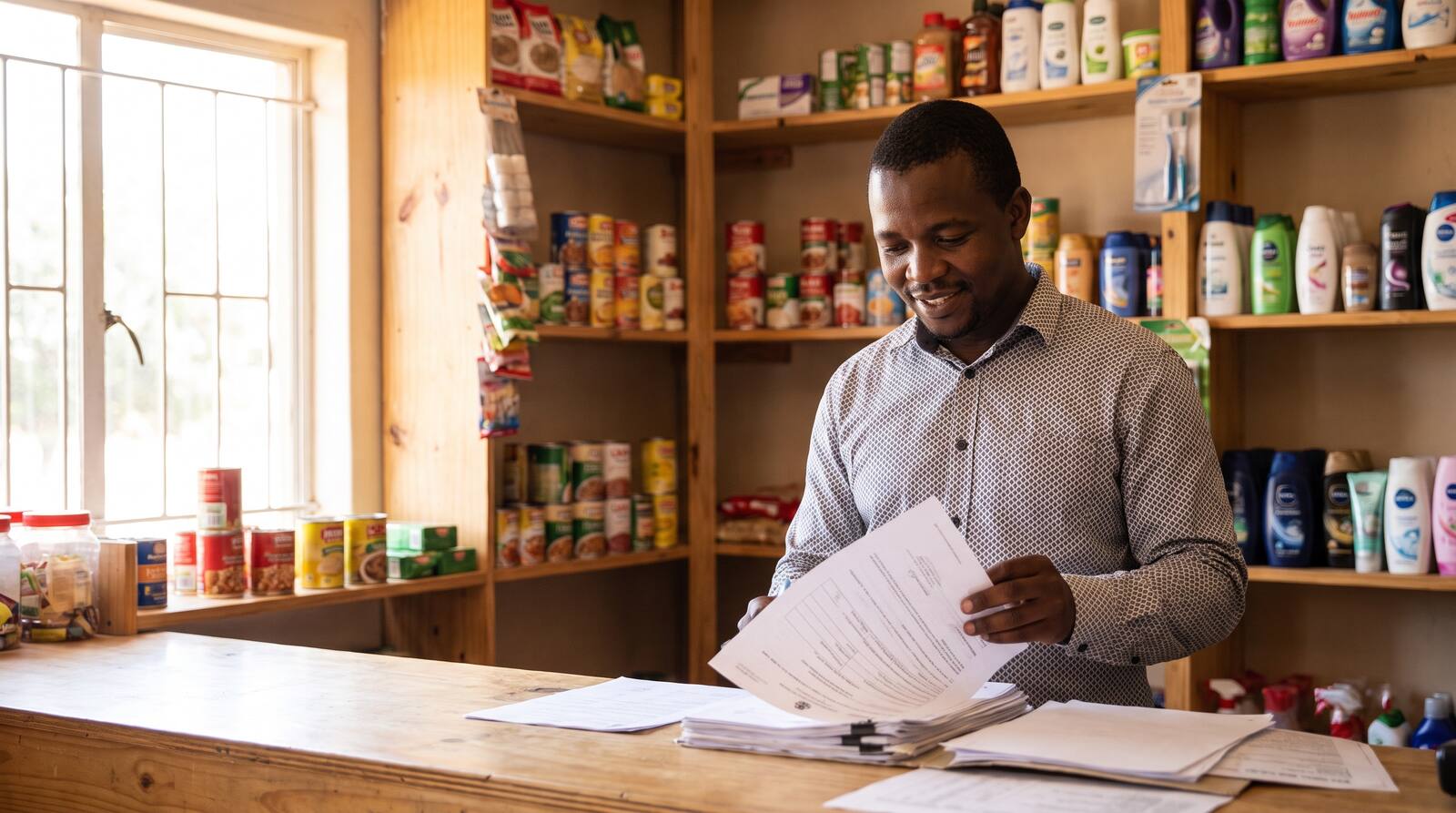
What a Spaza Shop Is
A spaza shop is a small convenience store run from a home, a rented room, or a street facing structure. It sells groceries, airtime, prepaid electricity, and everyday household items to people within walking distance. You can start one as a sole proprietor without registering a company, but the moment you want to apply for funding, get a tender, or open a business bank account in the shop name, you need proper registration. This guide shows you the legal steps in the correct order so you are not shut down six months in.
What a Spaza Shop Sells
A typical South African spaza shop stocks bread, milk, maize meal, sugar, cooking oil, candles, paraffin, soap, cigarettes, cold drinks, sweets, and basic toiletries. Many also sell prepaid electricity, airtime, and lotto. Some add a braai bread or vetkoak option, or a tuck shop section for school uniforms.
Your stock depends on who lives around you. Walk your street and note what people buy most, what they walk to the shopping centre for, and what is missing close to home. That gap is your profit.
Do You Need CIPC Registration?
You can legally run a spaza shop as a sole proprietor using your ID. You do not have to register a company at CIPC just to sell bread and airtime from your house.
But if you want to:
- Open a business bank account in the shop name
- Apply for SEFA, NYDA, or bank funding
- Register for VAT once your turnover crosses the SARS threshold
- Supply a school, clinic, or government office
- Get a B-BBEE certificate
- Protect your personal name from the business name
then you need a registered private company with a Memorandum of Incorporation. KAGO handles this for R995 through its Registration Basic pack, which includes name reservation and CIPC filing.
The Municipal Trading Licence
Every municipality has by-laws that govern informal trading. Even if you trade from your own house, you may need a business licence or permit from your local municipality, a letter of consent if you are renting, a zoning approval if you are in a residential area, a health certificate if you sell perishable food, and a fire safety clearance if you store flammables like paraffin.
The exact document names change from one municipality to another. Johannesburg calls it a trade permit. Cape Town uses a business licence. Durban issues an informal trading permit. Phone your local municipal offices and ask what applies to your area before you spend money on stock.
Food Safety Certificate
If you sell anything that can spoil, bread, milk, meat, cooked food, you need a certificate of acceptability from your municipality's environmental health department. They inspect your premises, check that you have a washbasin, separate storage for food and chemicals, and pest control. Without this certificate, you can be fined or shut down.
A Clear Sequence of Steps
- Write down your product list and target area
- Check your premises zoning with the municipality
- Apply for the trading licence or permit
- Register a company at CIPC if you plan to apply for funding
- Open a business bank account
- Get quotes from three wholesale suppliers
- Set your prices based on your competitor's prices
- Buy your first stock
- Keep every receipt and invoice from day one
- Register for income tax with SARS once you start trading
Funding You Can Apply For
A spaza shop qualifies for small business funding from several sources, but none of them are automatic. SEFA offers small loans to micro enterprises. NYDA has a grant programme for young entrepreneurs. Large corporates run enterprise development funds. Retailers like Pick n Pay and Boxer have supplier development programmes.
Every funder asks for the same documents: a business plan, a financial plan, proof of registration, a business bank account statement, and a clear explanation of what the money is for. KAGO builds these packs. The Complete Business Plan is R3,495, the Financial Plan is R1,895, and the Funding Pack combines both plus registration for R3,995.
No one can promise you funding. The funder decides. What KAGO does is make sure your paperwork is correct so you are not rejected for missing a document.
Insurance You Should Not Skip
A spaza shop carries real risks: theft, fire, stock damage from a freezer breakdown, and liability if a customer gets hurt on your premises. Basic business insurance from any registered insurer covers stock, equipment, and public liability. Ask for a quote for a small shop policy and compare three before you commit.
Keeping Records From Day One
Most spaza shops fail not because they lose money, but because the owner cannot prove they are making money. From the first sale, keep a daily sales book, supplier invoices, rent receipts, bank statements, and stock count sheets every week. These records are what funders, SARS, and the municipality will ask for. KAGO's Plan Startup Guide, R450, shows you the basic format if you have never kept business records before.
Common Mistakes That Get Shops Closed
Trading without a municipal permit is the top reason spaza shops get shut down. Selling expired food is the second. Operating without a health certificate when you sell food is the third. Selling counterfeit cigarettes or alcohol without a liquor licence will get you arrested, not just fined.
The Bottom Line
A spaza shop is a real business. Treat it like one, register it, licence it, record it, and it can grow into a proper convenience store or a chain. Treat it as a side hustle with no paperwork, and you stay vulnerable to council raids, fines, and lost funding opportunities. KAGO exists to help South African entrepreneurs do the paperwork properly at a fixed price, so you can focus on selling.
Questions people also ask
Do I need a CIPC company registration to run a spaza shop?
No, you can trade as a sole proprietor with just your ID. But if you want business funding, a business bank account, or to supply schools and government, you need a registered company.
Can I get a grant to start a spaza shop?
You can apply for NYDA grants or SEFA loans as a micro enterprise. No one can guarantee funding because the funder decides based on your business plan and paperwork.
Do I need a health certificate if I only sell bread and cold drinks?
Yes, if you sell any perishable food item you need a certificate of acceptability from your local municipality's environmental health department. They inspect your premises before issuing it.
Fixed prices, no hourly billing
Let KAGO build it for you.
Business plans, financial plans, company registration, logos and tender packs, at a menu price, in days. We make your business funding-ready. The funder always decides.