
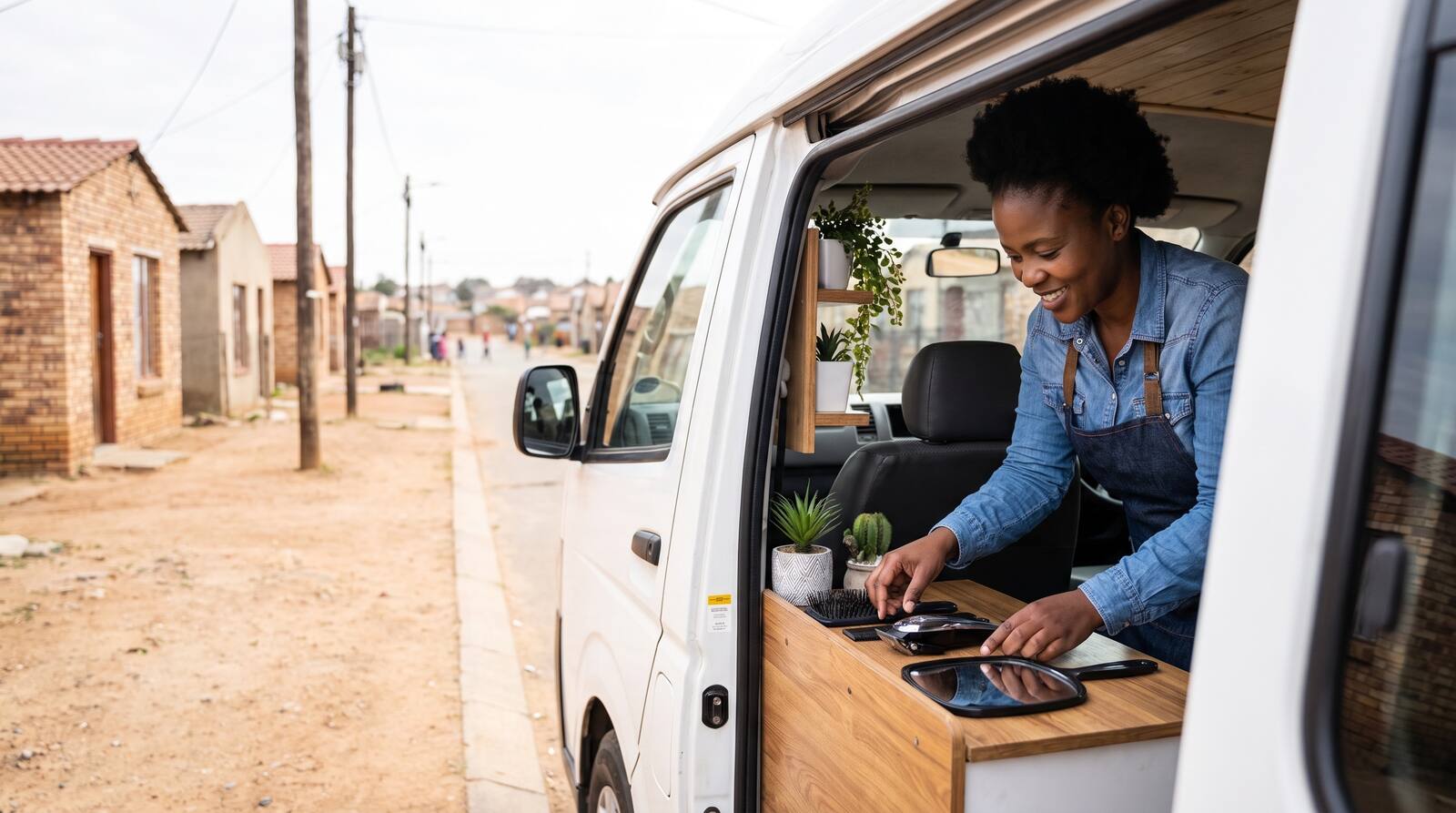
The best small businesses to start in South Africa right now are those that solve daily problems for people around you, require low start-up capital, and can run from home or a mobile setup. Think township food sales, cleaning services, scholar transport, mobile hair and beauty, waste collection, and childcare. These businesses survive tough economic times because people always need to eat, travel, keep clean, and care for their children.
How to choose the right business
Do not start a business just because someone else made money from it. Look at your own skills, the money you have right now, and the people in your area. A business that needs a lot of money to start will struggle if you do not have cash reserves. Start with what you know and what your community lacks.
6 small businesses you can start in South Africa
1. Township food business
People will always buy food. You can start by selling amagwinya, kotas, or braaied meat from your home or a street corner. You need a gas braai, a tent, tables, and a municipal permit. Keep your prices low and your portions generous. Food businesses grow fast through word of mouth. You can start with a few hundred rand for ingredients and grow your stock as you sell. Make sure you have a clean preparation area and follow basic food safety rules so you do not make customers sick.
2. Cleaning services
Many offices, schools, and private homes need reliable cleaners. You can start this business with basic cleaning supplies and transport. You can offer regular domestic cleaning, carpet cleaning, or post-construction cleaning for new buildings. You will need to register a company and get a B-BBEE certificate if you want to clean for big businesses or government. Start by cleaning for friends and family, ask them for referrals, and build a client list. You will need trustworthy staff if you expand.
3. Scholar transport
If you have a reliable minibus or a large SUV, scholar transport is a very stable business. Parents pay monthly for you to pick up and drop off their children at school. You must have a valid professional driving permit (PrDP) and a roadworthy vehicle. This business pays consistently during the school term. You need to be punctual and communicate well with parents. Your vehicle must be safe and clean. Parents will not trust you with their children if your car is broken or dirty.
4. Mobile salon
Renting a salon space is expensive. A mobile salon lets you go to your clients' homes to do hair, nails, or makeup. You need your tools, products, and a reliable way to travel. You save on rent and can charge a premium for the convenience of coming to the client. You can market your services on WhatsApp and local Facebook groups. Take good photos of your work to show new clients. You must keep your tools clean to avoid infections.
5. Waste collection and recycling
Many townships and suburbs lack reliable rubbish removal. You can start a business collecting household waste for a small monthly fee, or collecting recyclable materials like cardboard, plastic, and metal to sell to recycling centres. You need a bakkie or trailer and strong labour. This business has low start-up costs and helps your community. You can start by collecting from a few streets and expanding as more households join. You must be consistent. If you miss a week, people will cancel your service.
6. Early childhood development centre
Parents need safe places for their children while they work. If you love children and have space in your home, you can start a creche. You must register with the Department of Social Development to get a partial care licence. This takes time but makes your centre eligible for government subsidies. You need to follow health and safety rules. You must have a safe play area, clean toilets, and enough staff for the number of children. Start with a few children from your neighbourhood and grow from there.
How to register your business
Before you can trade legally, open a business bank account, or apply for funding, you must register your business with the Companies and Intellectual Property Commission (CIPC). You can register a private company to protect your personal assets. KAGO can handle your CIPC registration for a flat fee of R995 with our Registration Basic package.
You will also need to register for tax with the South African Revenue Service (SARS). If your turnover is below the SARS threshold for compulsory VAT registration, you do not have to register for VAT yet. You must keep records of all your income and expenses from day one. A simple notebook or spreadsheet is enough to start.
What you need before you look for funding
Many entrepreneurs want funding, but funders like the Small Enterprise Finance Agency (SEFA), the National Youth Development Agency (NYDA), or banks will not give money to an idea. You need to prove your business works. Start small, sell to your neighbours, and keep records of your sales.
When you are ready to apply for funding, you will need a business plan and financial projections. KAGO builds these documents so you are ready to speak to funders. Remember, KAGO makes your business funding-ready, but the funder always makes the final decision. You will also need a company profile to look professional. KAGO offers a Company Profile for R1,995 to help you present your business clearly to potential partners and funders.
Getting your compliance in order
If you want to do business with the government or large companies, you need more than just a CIPC registration. You will need a B-BBEE certificate, a tax clearance certificate, and a Central Supplier Database (CSD) registration. You may also need a Construction Industry Development Board (CIDB) grading if you are in construction, or a Sector Education and Training Authority (SETA) accreditation if you offer training. KAGO offers a Compliance Kit for R2,495 to help you get these documents in order.
Questions people also ask
Do I need a lot of money to start a small business in South Africa?
No, you can start many businesses like mobile salons or waste collection with very little money. Start with what you have, sell to people you know, and reinvest your profits to grow.
Can I get funding from the government for my new business?
Government agencies like NYDA and SEFA offer funding, but they require a registered business and a solid business plan. You must prove your business is viable before they will consider you.
Do I need to register my business before I start trading?
You can start trading as a sole proprietor without registering, but you must register with CIPC to open a business bank account or apply for funding. Registration protects your personal assets and makes you look professional.
Fixed prices, no hourly billing
Let KAGO build it for you.
Business plans, financial plans, company registration, logos and tender packs, at a menu price, in days. We make your business funding-ready. The funder always decides.