
Small Business Ideas That Actually Work in South Africa
The best small business to start in South Africa right now is one that solves a daily problem in your own community, needs little money to test, and can be registered quickly so you can chase tenders and funding later. Think food, transport, cleaning, services for other businesses, and anything that keeps pace with load shedding and rising living costs. Below are ideas that fit real South African conditions, followed by the exact order of steps to make yours legal and fundable.
Ideas You Can Start With Almost No Money
1. Food from home
Cooking and selling food from your kitchen is one of the fastest ways to start. Kotas, braai packs, lunch deliveries to offices and schools, and weekend plates all sell well in townships and suburbs alike. You can start with a few hundred rand in ingredients and sell through WhatsApp and Facebook groups. Once you grow, your local municipality will expect you to comply with basic food handling rules, so speak to your municipal health office before you scale up.
2. Cleaning services
Homes, offices, schools and construction sites all need cleaners. Your startup costs are cleaning materials and transport. The bigger opportunity is contracts with businesses and government, but those require a registered company and sometimes a tax clearance certificate, so register early.
3. Laundry and ironing
Working people in flats and townhouses will pay for wash-and-fold or ironing services. You can start from home with a machine and a pickup and delivery offer. It is steady, repeat income, which is exactly what funders like to see.
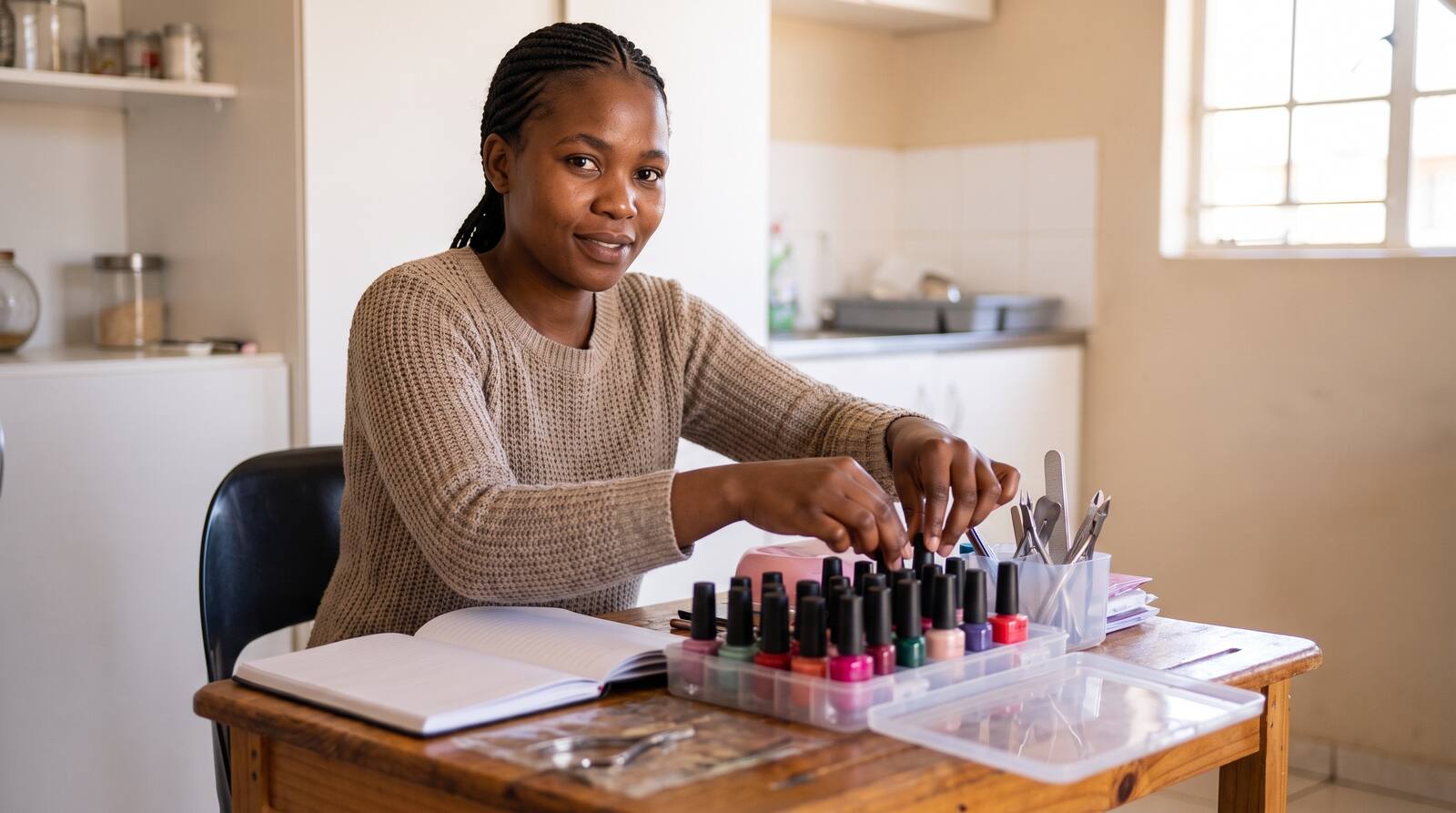
4. Hair, nails and beauty
If you have the skill, you can start from home, a salon chair rental or a mobile service. Beauty is one of the most reliable township businesses because people spend on it even when money is tight.
5. Tutoring and extra lessons
Parents pay for maths, science and English extra lessons. You can tutor from home, at a school after hours or online. If you build a track record, you can grow it into a learning centre.
Ideas That Solve Load Shedding and Rising Costs
6. Backup power services
South Africans are desperate for alternatives to candles and dead fridges. You do not need to be an electrician to start here. You can resell inverters, portable power stations, solar lights and gas solutions, or partner with a qualified installer and handle the sales side. If you do installations yourself, you must be a qualified and registered electrician to issue the required certificates, so know the line between selling and installing.
7. Gas and alternative energy retail
Gas stoves, gas refills and solar geysers are in steady demand. A small stock of fast-moving items plus good WhatsApp marketing can get you going.
8. Water solutions
JoJo tank installations, rainwater harvesting setups and water delivery in areas with supply problems are all growing businesses. Start by serving one neighbourhood well.
Ideas for People Who Want Business Clients
9. Digital services
Social media management, website building, graphic design and video editing can be done from a laptop anywhere. Small South African businesses need these services but cannot afford big agencies. You can charge monthly retainers, which builds stable income.
10. Bookkeeping and admin
Many spaza shops, salons and small contractors lose money because nobody keeps their books. If you are organised and can learn basic accounting software, this is a real business. Registered businesses need monthly records for SARS anyway, so your service is never optional for them.
11. CV writing and tender document services
Job seekers and small contractors both pay for professional documents. If you understand tender requirements, helping other businesses compile compliance documents is a strong niche.
12. Event equipment hire
Chairs, tables, gazebos, sound systems and mobile fridges for funerals, weddings and parties. Buy items gradually and rent them out repeatedly. One weekend can pay off an item.
Ideas With Bigger Money but Bigger Contracts
13. Security services
Armed response and guarding need licences and training, so this is not a quick start. But a smaller entry point is installing cameras, alarms and electric fencing, or providing guarding services once you meet the Private Security Industry Regulatory Authority requirements.
14. Construction and maintenance
Painting, paving, ceiling repairs and renovations are always needed. Government and property companies award these contracts, but you will need a registered company, a CIDB grading for construction work and compliance documents to compete.
15. Transport and logistics
Scholar transport, delivery services for spaza shops and small retailers, or moving furniture. You need a valid operating licence for scholar transport, so check with your provincial transport department first.
16. Agriculture on a small scale
Vegetable tunnels, chicken layers or broilers, and herb growing can start in a backyard. Start small, prove your market, then approach the Department of Agriculture, Land Reform and Rural Development or the provincial agriculture department about support programmes.
How to Choose the Right Idea for You
Ask yourself three honest questions:
- Do people in my area already pay for this? If yes, there is a market. If you have to convince people they need it, your marketing costs will eat you alive.
- Can I start with what I have? The best first business uses skills and equipment you already own.
- Can I survive three months without profit? If not, keep your job or start part-time.
The Right Order of Steps
Many people get this wrong and waste money. Follow this sequence:
- Test the idea informally. Sell to a few customers, even from home, and confirm people will pay.
- Register your company with the CIPC. A private company registration gives you a registration number, which you need for almost everything else.
- Register for tax with SARS. You will need a tax reference, and later a tax clearance certificate or tax compliance status for tenders and funding applications.
- Open a business bank account. Keep business money separate from personal money from day one.
- Get a business plan and financial plan. Funders like SEFA, the NYDA and banks will not look at you without them.
- Register on the Central Supplier Database if you want government work.
- Apply for funding or tenders, or approach the NYDA and SEDA for support programmes and mentorship.
What Funding You Can Apply For
Be careful here. No one can promise you funding, and any company that guarantees it is lying to you. What you can do is make yourself fundable:
- SEFA offers loans to small businesses that can show they can repay.
- The NYDA supports young entrepreneurs with grants and non-financial support, and has strict application requirements.
- SEDA offers mentorship, training and help with tender documents rather than cash.
- Banks and microlenders want a business plan, financials and some of your own contribution.
The funder always makes the final decision. Your job is to walk in with a registered company, clean records and a business plan that shows the numbers make sense.
Where KAGO Fits In
You can register your company, build a business plan and get your compliance documents in place without running around. KAGO does exactly this at fixed prices, for example a basic company registration, a complete business plan and a financial plan, so you know the cost upfront instead of getting surprise quotes. Once those are done, you are ready to approach funders and tender portals on your own terms.
Final Word
The idea matters less than the execution. A person who registers properly, keeps clean records and serves customers well with a simple food business will beat someone with a clever idea and no paperwork. Pick one idea from this list, test it this month, and start the registration process while the first customers are still paying you.
Questions people also ask
Which small business is most profitable in South Africa?
There is no single most profitable business, because profit depends on your area, your costs and how well you serve customers. Food, cleaning, backup power sales and services to other businesses are consistently in demand because they solve daily problems people already pay for.
Do I need to register my business before I start trading?
You can test your idea as an individual, but you should register with the CIPC before you chase tenders, funding or business contracts. Most funders and government buyers will only deal with a registered company with a tax reference from SARS.
How much money do I need to start a small business in South Africa?
Many of the ideas above can start with a few hundred to a few thousand rand because they use skills and equipment you already have. The bigger costs come later when you need registration, compliance documents and a business plan, which is why you should only spend on those once your idea is proven.
Fixed prices, no hourly billing
Let KAGO build it for you.
Business plans, financial plans, company registration, logos and tender packs, at a menu price, in days. We make your business funding-ready. The funder always decides.