
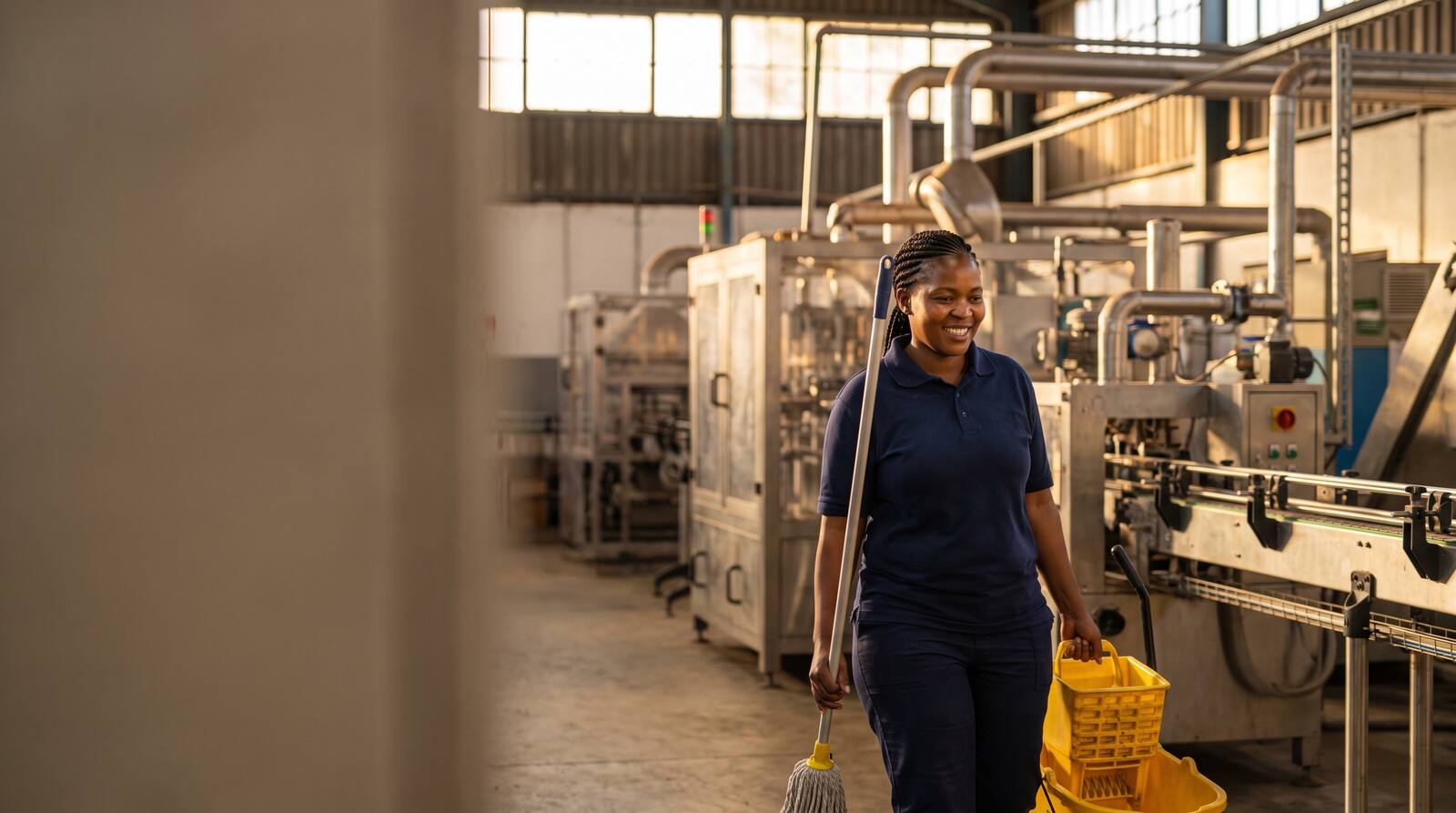
Registering a Cleaning Company in South Africa
To register a cleaning company in South Africa, you need to register a private company with the CIPC, get a tax number from SARS, open a business bank account, and then sort out the compliance documents that clients and funders will ask for. The registration itself is quick. The compliance work after that is what takes time and money, but it is what makes your business real and ready to quote for contracts.
Below is the step by step process in the order you should follow it.
1. Register Your Company with CIPC
Your first step is to register a private company, also called a Pty Ltd, with the Companies and Intellectual Property Commission, or CIPC. This is the legal entity that will trade, sign contracts, and open a bank account. You can do this yourself on the CIPC website or let a service like KAGO do it for you. KAGO charges R995 for a Registration Basic, which includes the company registration and the standard documents CIPC issues.
You will need:
- A unique company name, or up to four name options if your first choice is taken.
- The director's ID number and contact details.
- A physical address in South Africa for the registered office.
Once CIPC approves your name, you get your Co14.3, your Co15, your Memorandum of Incorporation, and your share certificates. These are the documents that prove your company exists.
2. Get a SARS Tax Number
Every registered company needs a South African Revenue Service tax number. If you are the only director and you already have a personal tax number, SARS will often issue your company tax number automatically once CIPC registers your company. If not, you go to a SARS branch or apply online.
You will need this tax number to:
- Open a business bank account.
- Register for PAYE if you employ staff.
- Apply for any government funding or tenders.
- Get a Tax Clearance Certificate, which is now called a Tax Compliance Status or TCS. You can request this on eFiling.
3. Open a Business Bank Account
You cannot run a cleaning business through your personal bank account if you want to quote companies, government departments, or any client that pays into a business account. Go to your bank with your CIPC documents, your ID, and your company tax number. Most banks will open the account the same week if your papers are in order.
This is also where your business starts to separate from your personal money. Keep every business expense and every invoice through this account. Funders and clients will check.
4. Get a B-BBEE Certificate
A B-BBEE certificate proves your ownership and management status under the Broad-Based Black Economic Empowerment Act. If your cleaning company is at least 51 percent black owned, you can get an EME or QSE certificate that gives you an edge when quoting for corporate and government work.
Many clients will not award a contract to a supplier without a B-BBEE certificate or an affidavit confirming your status. You can get a certificate through an accredited verification agency, or for small businesses, you can swear an affidavit at a commissioner of oaths.
5. Register with the UIF
If you employ staff, and a cleaning company always employs staff, you must register with the Unemployment Insurance Fund. This is a legal requirement. You register through the Department of Labour or on the UIF online portal. You will deduct UIF from your employees' salaries every month and pay it over to the fund.
Do not skip this. Government tenders and corporate clients will ask for proof that your workers are registered.
6. Register with COIDA
The Compensation for Occupational Injuries and Diseases Act requires every employer to register with the Compensation Fund. This covers your employees if they are injured at work. Cleaning staff face real risks, from slips to chemical exposure, so this cover matters.
You register with the Compensation Fund, get a letter of good standing, and renew it annually. Many tenders will ask for this letter.
7. Get a CIDB Grading if You Want Construction Cleaning
If you want to clean on construction sites or do post construction cleaning for developers and contractors, you may need a grading from the Construction Industry Development Board, or CIDB. The CIDB grades contractors from grade 1 up to grade 9, based on your track record and financial standing.
For general domestic and office cleaning, you usually do not need CIDB. For construction related cleaning, you do. Check the tender requirements before you apply so you do not waste money on a grading you cannot use yet.
8. Register on the Central Supplier Database
The Central Supplier Database, or CSD, is the government's single database of suppliers. If you want to clean schools, hospitals, municipal offices, or any government building, you must be on the CSD. There is no separate application for every department. You register once and every government buyer can find you.
To register on the CSD you will need:
- Your CIPC documents.
- A tax compliance status pin from SARS.
- A B-BBEE certificate or affidavit.
- Your bank confirmation letter.
- Proof of address.
- Company contact details.
The CSD is free to register on, but the paperwork must be correct or your application will be rejected.
9. Prepare Your Compliance Pack
Once your company is registered, the real work begins. You need a set of documents that you can hand to any client or funder at a moment's notice. KAGO calls this a Compliance Kit and charges R2,495 for it. It pulls together the registrations and documents that prove your business is legitimate and ready to trade.
A complete compliance pack usually includes:
- CIPC registration documents.
- SARS tax compliance status.
- B-BBEE certificate or affidavit.
- UIF and COIDA letters.
- Bank confirmation letter.
- Company profile.
Do You Need a Business Plan for a Cleaning Company?
You do not need a business plan to register your company. CIPC does not ask for one. But if you want to apply for funding from SEFA, NYDA, or a bank, or if you want to pitch a big contract to a corporate client, you will need a business plan and a financial plan that shows your numbers make sense.
KAGO offers a Complete Business Plan for R3,495. It is built for South African entrepreneurs who need to show funders and clients that the cleaning business has a clear path to profit. KAGO does not guarantee funding because no honest service can. KAGO makes your business funding ready, and the funder decides.
How Much Does It Cost to Register a Cleaning Company?
The cost depends on how far you want to go. If you just want the company registration, CIPC charges a fee and KAGO charges R995 for a Registration Basic that handles it for you. If you want registration plus all the compliance documents, KAGO's Compliance Kit is R2,495. If you want the full setup, registration, compliance, business plan, and financial plan, look at KAGO Complete for R7,995.
The cheapest route is doing everything yourself, but the mistakes cost time. Most entrepreneurs underestimate how long it takes to fix a rejected CIPC name or a failed CSD upload.
What Makes a Cleaning Business Ready for Tenders?
A tender is a formal request for quotes from government or large organisations. To win a tender, your cleaning company must be compliant before you submit. That means your company exists, your taxes are up to date, your staff are covered, your B-BBEE status is clear, and you are on the CSD.
Most tenders also ask for:
- A company profile.
- References from previous clients.
- Proof of equipment and capacity.
- Health and safety compliance if the site requires it.
KAGO can build a company profile for R1,995. It is a short document that tells the client who you are, what you do, who you have cleaned for, and why they should trust you. It is not optional for tenders. Every competitor will have one.
Final Checklist for Your Cleaning Company Registration
Here is the order you should follow:
- Register your Pty Ltd with CIPC.
- Get your company tax number from SARS.
- Open a business bank account.
- Get a B-BBEE certificate or affidavit.
- Register with the UIF for your employees.
- Register with COIDA and get your letter of good standing.
- Get a CIDB grading if you are targeting construction cleaning.
- Register on the CSD for government tenders.
- Build your company profile and compliance pack.
- Write a business plan if you are applying for funding.
Do these in order and you will not waste money redoing steps. Skip a step and you will hit a wall when a client or funder asks for it.
Why KAGO Exists
KAGO was built for South African entrepreneurs who want to start strong and avoid the confusion of doing compliance alone. Whether you are in a township, a suburb, or a small town, the process is the same. The CIPC does not care where you live. SARS does not care. The CSD does not care. What matters is that your paperwork is right.
If you want KAGO to handle your cleaning company registration and compliance, start with the Registration Basic at R995 and add what you need from there. If you want everything in one go, the KAGO Complete at R7,995 covers registration, compliance, your business plan, your financial plan, and your company profile.
Questions people also ask
Can I register a cleaning company as a sole proprietor instead of a Pty Ltd?
Yes, you can trade as a sole proprietor using your personal name and tax number, but most corporate and government clients prefer or require a registered Pty Ltd. A Pty Ltd also protects your personal assets if the business gets into debt.
Do I need a licence to run a cleaning company in South Africa?
There is no single cleaning licence required by law, but you may need specific health and safety certifications for certain sites. Government tenders will ask for compliance documents like COIDA and UIF instead of a cleaning licence.
How long does it take to register a cleaning company with CIPC?
CIPC registration can take several days to a few weeks depending on name approval delays and backlog. You can speed this up by choosing a unique name and making sure your documents are correct the first time.
Fixed prices, no hourly billing
Let KAGO build it for you.
Business plans, financial plans, company registration, logos and tender packs, at a menu price, in days. We make your business funding-ready. The funder always decides.