
The best home business ideas in South Africa right now are online retail, freelance services, home-based catering, and digital tutoring. You can start most of these with just a smartphone, data, and a small amount of start-up capital. The key is to choose something that fits your skills and your budget, then register it properly so you can grow.
Online Retail and Reselling
Selling products online is one of the fastest ways to start a business from home. You do not need a massive warehouse. Many South African entrepreneurs start by buying clothes, cosmetics, or electronics in bulk and reselling them on WhatsApp, Facebook Marketplace, or Instagram.
You can also try dropshipping, where you sell products through a website but the supplier ships them directly to the customer. This saves you from holding stock. Just remember to factor in local courier costs and the reliability of delivery services in your area. Use local payment gateways like Yoco or SnapScan so customers can pay you instantly without needing cash.
Freelance and Admin Services
If you have a skill, you can sell it from your living room. South African small businesses constantly need help with admin, social media, and basic accounting. You can offer services as a virtual assistant, a copywriter, a graphic designer, or a bookkeeper.
You can find clients on platforms like Upwork or Fiverr, but you can also market yourself directly to local businesses in your area. A plumber or a hairdresser might not have the time to run their Facebook page. You can step in and manage it for a monthly fee. All you need is a reliable internet connection and a quiet space to work.
Home Catering and Baking
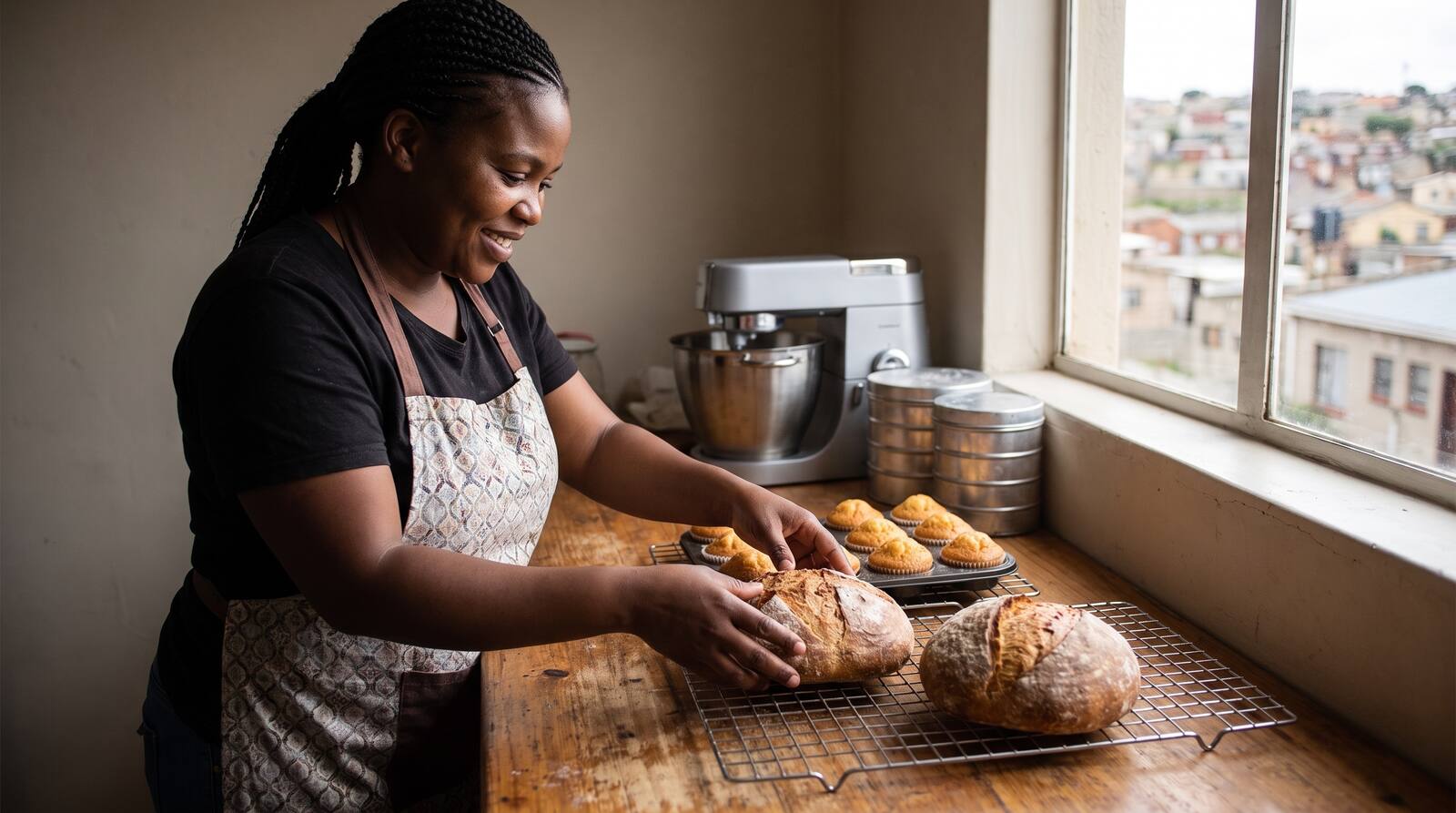
Food businesses are always in demand. You can start by selling lunchboxes to workers at a nearby factory or office park. Alternatively, you can bake custom cakes, prepare braai packs, or cook traditional meals for events.
Start small with your immediate community. Word of mouth is powerful in South African townships and suburbs. If you are preparing food for the public, you must comply with local municipal health regulations. You will eventually need a Certificate of Acceptability from your local municipality to operate legally and sell to larger retailers or cater for big events.
Digital Tutoring and Consulting
If you are an expert in a specific subject, you can teach it online. Many parents look for extra lessons for their children in subjects like mathematics, science, or accounting. You can conduct these sessions over Zoom or Google Meet as part of an online tutoring programme.
You can also offer consulting services. If you know how to write business proposals, understand B-BBEE, or know how to navigate the CIDB grading system, you can charge consultants and contractors for your knowledge. This requires zero stock and relies entirely on your expertise.
Steps to Register Your Home Business
Once you have tested your idea and have a few paying customers, you need to make it official. Operating as a registered business builds trust and allows you to open a business bank account.
- Register your company: You need to register a private company with the CIPC. You can do this yourself on their website, or KAGO can handle it for you with our Registration Basic package for R995.
- Get a tax number: SARS will issue your company an income tax number automatically when you register with CIPC. You must keep records of your income and expenses to submit your annual returns.
- Open a business bank account: Do not mix your personal money with your business money. Most South African banks offer low-cost business accounts for start-ups. Take your CIPC registration documents and your ID to the bank branch centre to open one.
- Set up payment methods: Get a card machine or a payment link from a provider like Yoco or PayFast. This makes it easy for customers to pay you, even if they do not have cash on hand.
Preparing for Funding
Running a business from home keeps your overheads low, but you will eventually need money to buy better equipment or run marketing campaigns. You might approach SEFA, the NYDA, or a local bank for a loan.
Funders will not give you money just because you have a good idea. They want to see that you have a plan. You need a business plan and financial projections that show how you will make a profit and pay them back. KAGO can help you put this together. Our Complete Business Plan costs R3,495 and gives you the documents you need to approach funders. Remember, KAGO makes you funding-ready, but the funder always makes the final decision.
Managing Load Shedding and Data Costs
Working from home in South Africa comes with practical challenges. Load shedding can stop your work completely if you rely on a desktop computer or Wi-Fi. Invest in a power bank for your phone and a small UPS for your router so you can stay online during power cuts.
Data is also expensive. Try to do your heavy downloading and uploading during off-peak times if your network offers cheaper rates. Keep your business transactions on platforms that use minimal data, like WhatsApp Business, to save on your monthly costs.
Conclusion
Starting a business from home is a realistic way to earn an income in South Africa. Pick an idea that matches your skills, start small, and register your company when you are ready to grow. Keep your records clean and build a solid business plan if you want to apply for funding later.
Questions people also ask
Do I need to register my home business with CIPC immediately?
No, you can test your idea as a sole proprietor first. However, registering a private company protects your personal assets and helps you open a business bank account once you have regular customers.
Can I get a grant from the NYDA for my home business?
The NYDA offers grant funding for young entrepreneurs, but you must have a registered company and a solid business plan to apply. KAGO can help you prepare the documents, but the NYDA makes the final approval decision.
Do I need a licence to sell food from my home?
Yes, you need a Certificate of Acceptability from your local municipality health department. This ensures your kitchen meets the hygiene standards required to sell food to the public.
Fixed prices, no hourly billing
Let KAGO build it for you.
Business plans, financial plans, company registration, logos and tender packs, at a menu price, in days. We make your business funding-ready. The funder always decides.