
The Best Home Business Ideas in South Africa Right Now
The best home business ideas in South Africa are the ones that match your skills, need little start-up money, and serve a real need in your community. Some of the most proven options include home-based catering, cleaning services, hairdressing, tutoring, social media management, sewing and alterations, selling on Takealot or Facebook Marketplace, and consulting in whatever field you already know. The right idea depends on what you can already do and what people around you are willing to pay for.
Catering and Food Businesses
Food businesses work well from home because people always need to eat. You can start by cooking for events, funerals, stokvel meetings, or office workers in your area. You do not need a big kitchen to start, but you do need to follow the food safety by-laws of your local municipality. Contact your municipal environmental health office to find out what certificate you need before you sell your first plate.
Start small. Cook for people you know, ask for honest feedback, and build a name. Use WhatsApp and Facebook to show your food. Take photos of every dish. Word of mouth in a township or suburb spreads fast, and a good plate of food sells itself.
Cleaning and Laundry Services
Cleaning is one of the easiest businesses to start from home because the start-up cost is low. You need cleaning materials, transport to get to clients, and a reliable phone. You can clean houses, offices, or even cars. Many people in South Africa are looking for trustworthy cleaners, and trust is your biggest selling point.
You can also offer a laundry and ironing service from your home. People drop off their clothes, you wash and iron, and they collect. This works well in areas where people work long hours and do not have time to do their own laundry.
Hairdressing and Beauty Services
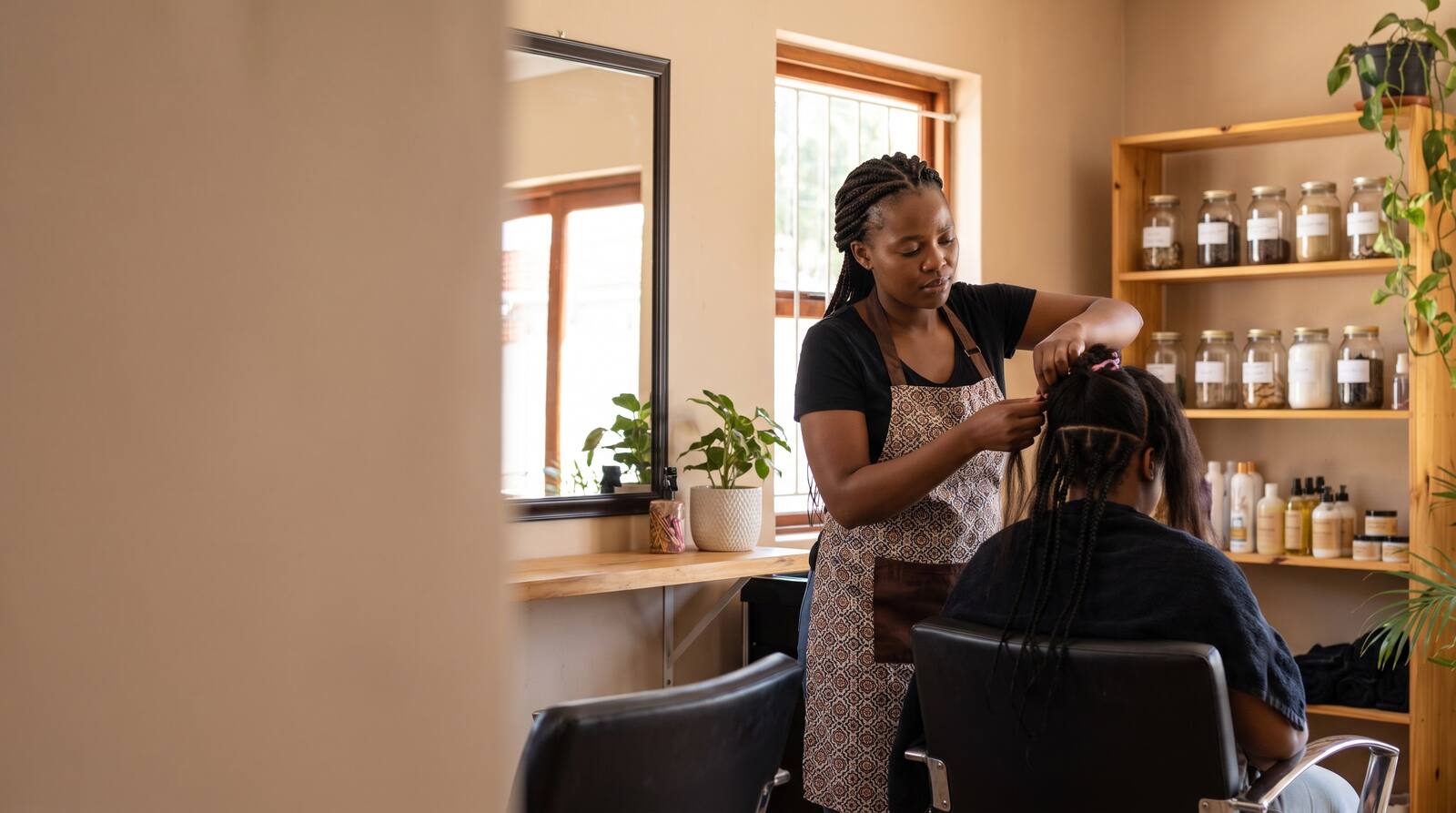
Hairdressing from home is a massive business in South African townships and suburbs. If you can braid, cut, style, or do nails, you can start from a room in your house. You need a mirror, a chair, your tools, and good lighting. You also need to keep your space clean because clients talk, and a dirty salon will lose customers fast.
Beauty services like manicures, pedicures, and makeup also work from home. Start with people you know, build a portfolio on social media, and let your work bring in new clients.
Tutoring and Teaching
If you did well in school or have a skill like maths, English, or coding, you can tutor from home. Parents are always looking for extra help for their children, especially in subjects like maths and science. You can tutor one-on-one or in small groups from your dining room table.
You can also teach skills like sewing, baking, or computer basics. People pay to learn things that can help them earn money, so practical skills are often more popular than academic ones.
Social Media Management
Many small businesses in South Africa know they need to be on Facebook and Instagram but do not have the time or skill to do it. If you understand social media, you can manage accounts for spaza shops, salons, restaurants, and other small businesses. You create posts, reply to messages, and help them get customers.
You only need a smartphone and data to start. Build your own social media presence first so potential clients can see what you can do. Show before and after results, like how many people engaged with a post or how many new customers walked in.
Sewing and Alterations
Sewing is a steady business because people always need clothes fixed. You can do alterations, make school uniforms, traditional wear, or items like aprons and masks. You need a sewing machine, fabric, and skill. If you do not know how to sew, you can learn from a local tailor or a short course at a college.
Start by offering alterations to people in your area. Hemming pants and fixing zips may seem small, but these jobs keep the money coming in while you build up to bigger orders.
Selling Online
You can sell products from home on platforms like Facebook Marketplace, Takealot, and OLX. Some people buy items in bulk and resell them, while others make their own products like candles, soap, or jewellery. The key is to find a product that people want and that you can sell at a profit after paying for stock, packaging, and delivery.
Takealot has a seller programme that lets you list your products on their site. You handle the stock and they handle the delivery, or you can store stock in their warehouse. Read their seller requirements carefully before you sign up.
Consulting and Freelancing
If you have experience in a field like accounting, human resources, marketing, or graphic design, you can consult or freelance from home. Small businesses often cannot afford full-time staff but need professional help. You can offer your services on a contract or hourly basis.
Freelancing platforms like Upwork and Fiverr also let you find clients outside South Africa, which means you can earn in foreign currency. You need a good internet connection and a portfolio of your work to get started.
How to Register Your Home Business
Once your business is making money, you should register it. Registration makes you look professional, lets you open a business bank account, and is required for most funding and tenders. You can register a sole proprietorship at SARS, or register a private company with the CIPC.
The CIPC process involves reserving a name, filing the company documents, and getting a registration certificate. You will also need to register with SARS for income tax, and if your turnover reaches the threshold, for VAT as well. If you have employees, you must register with the Department of Labour for UIF and COIDA.
KAGO offers a Registration Basic service for R995 that handles the CIPC company registration for you, so you do not have to navigate the system alone.
What You Need to Get Funding
If you want to grow your home business with funding from SEFA, the NYDA, or a bank, you will need more than just an idea. Funders want to see a business plan, financial projections, proof of registration, and sometimes a clear credit record. They want to know that the business can make enough money to pay back the loan or grant.
KAGO can help you become funding-ready with a Complete Business Plan at R3,495 and a Financial Plan at R1,895. But remember, KAGO makes you ready for funding. The funder always makes the final decision, and no one can guarantee that you will get money.
Steps to Start Your Home Business Today
- Pick one idea that matches your skills and what your community needs.
- Talk to potential customers before you spend money. Ask if they would buy what you want to sell.
- Start small with what you have. Do not take out a big loan before you have tested your idea.
- Keep records of every rand you spend and every rand you make.
- Register your business once you have regular income.
- Build a simple company profile so you look professional when you approach clients or funders.
Common Mistakes to Avoid
Do not start without testing your idea first. Many people spend money on equipment and stock before they know if anyone will buy. Do not ignore registration and tax, because SARS will catch up with you eventually. Do not mix your personal money with business money, because you will never know if your business is actually profitable.
Do not wait for funding before you start. Start with what you have, even if it is small. Funding should help you grow, not be the reason you begin. The best home businesses in South Africa started with very little and grew because the owner worked hard and served their customers well.
Questions people also ask
Do I need to register my home business before I start trading?
No, you can start as a sole proprietor and register later once you have regular income. But you must register with SARS for income tax if you earn above the threshold. Registration becomes necessary when you want to apply for funding, open a business bank account, or bid for tenders.
Can I get funding to start a home business in South Africa?
Yes, but funders like SEFA, NYDA, and banks require a business plan, financial projections, and proof of registration. No one can guarantee funding, because the funder decides based on whether your business can repay the money. Start small first, then apply for funding to grow.
Which home business needs the least money to start?
Cleaning services and social media management need the least money because you can start with basic equipment or just a smartphone. Tutoring also costs almost nothing if you already have the knowledge. The key is to start with what you already own and reinvest your profits to grow.
Fixed prices, no hourly billing
Let KAGO build it for you.
Business plans, financial plans, company registration, logos and tender packs, at a menu price, in days. We make your business funding-ready. The funder always decides.